Sparse Notes
Technical notes on DevOps, Kubernetes, Software Engineering, and AI.
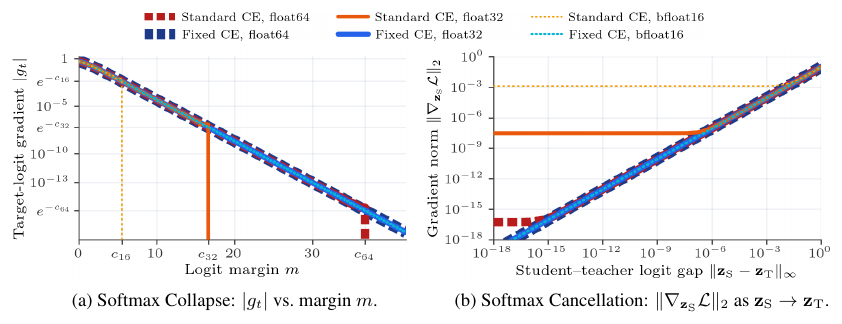
Weekly Paper Notes — one of the top picks from the 2026-10-24 CS paper digest. Area: AI / ML. Authors: Jonathan T. Barron, Dan Gnanapragasam, Michael Tschannen (Google DeepMind) arXiv: 2610.31642 · PDF TL;DR Every deep learning framework computes softmax and cross-entropy the same way: subtract the largest logit so exp can’t overflow, then normalise. That trick fixes overflow and leaves two quieter bugs in place. The first, which the authors call Softmax Collapse, hits when the model is very confident....
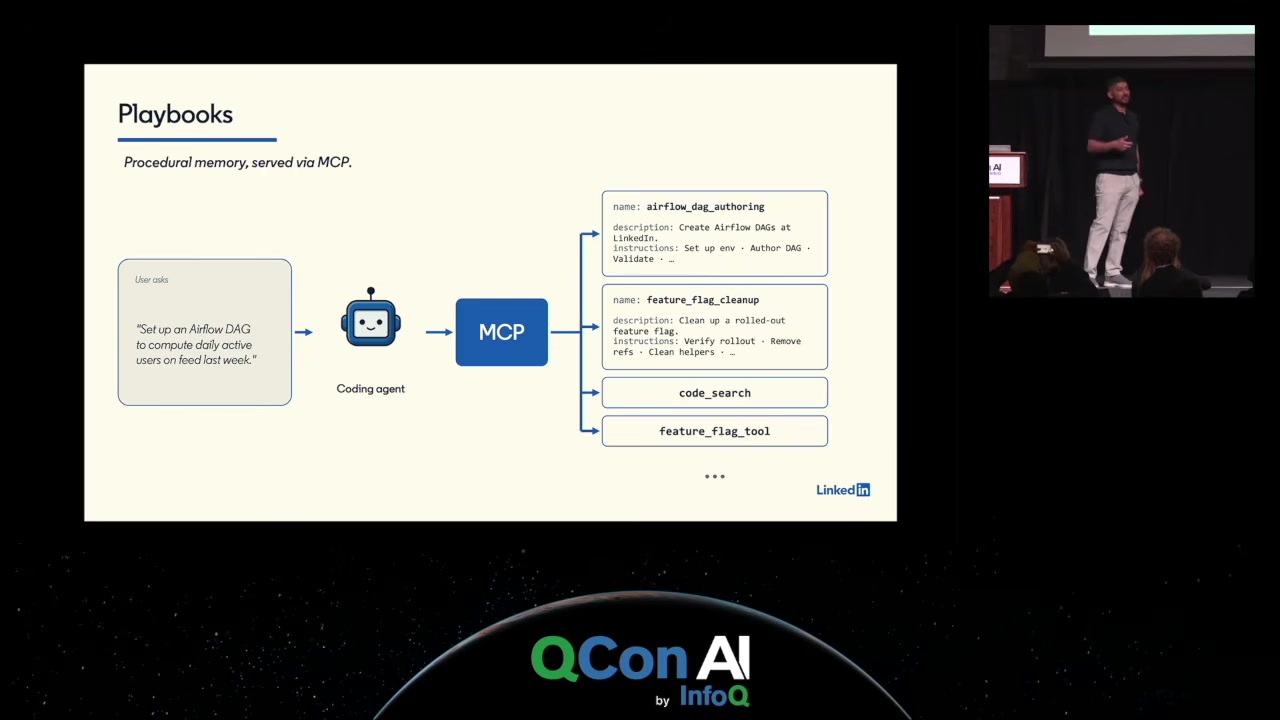
An on-call engineer at LinkedIn gets paged for a latency spike, pastes the alert link into a coding agent, and a few minutes later has a root cause (a buggy PR in a downstream service), a mitigation waiting for approval, an updated incident ticket and a fix PR. Ajay Prakash, a senior staff engineer at LinkedIn, opens his QCon AI Boston talk with that scenario. He then spends 45 minutes explaining the system behind it....
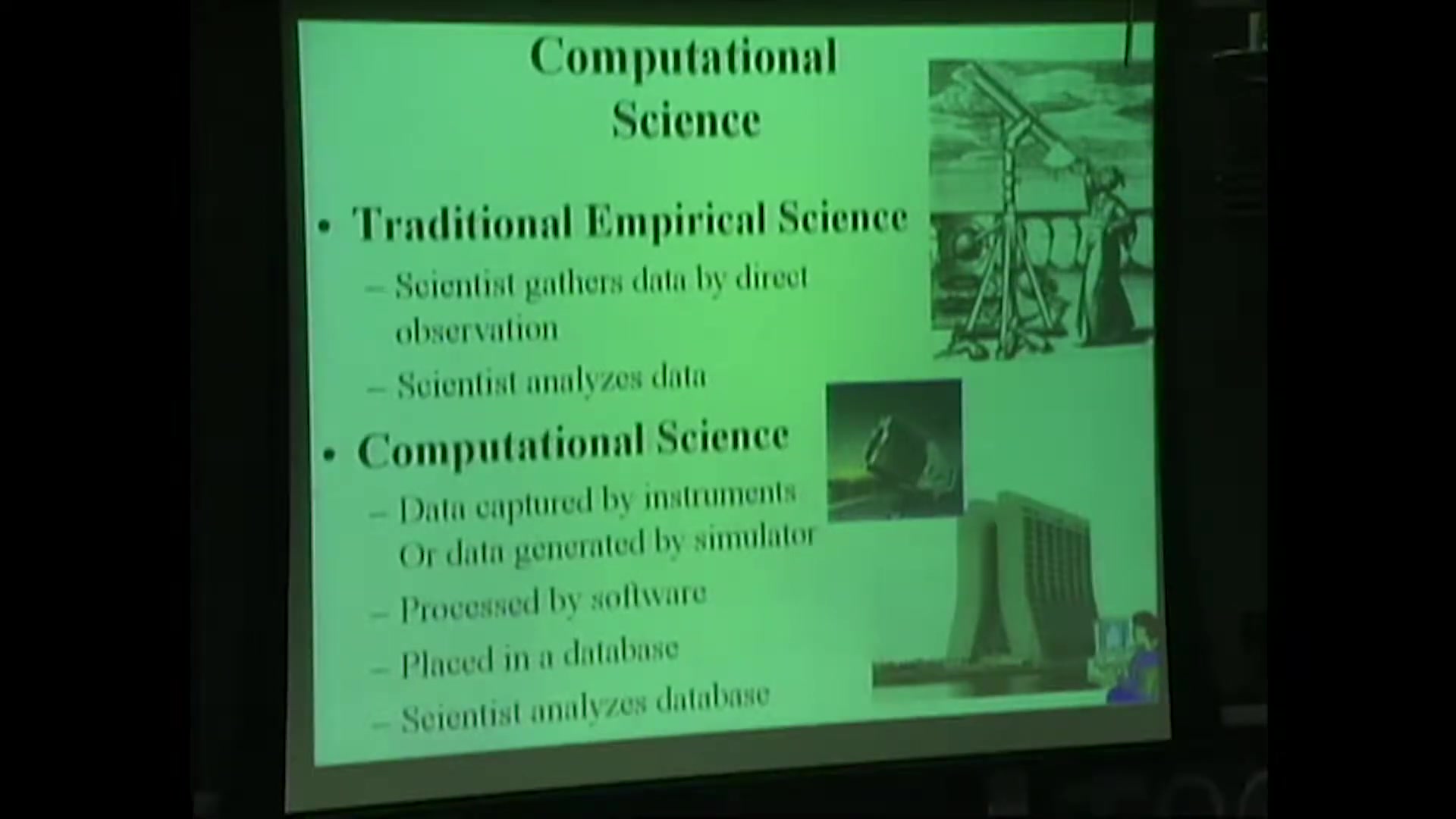
By 2001 Jim Gray had already won the Turing Award for transaction processing. Butler Lampson’s introduction describes TP as “pixie dust”: sprinkle it on a boring, non-fault-tolerant program and it becomes fault-tolerant and load-balanced. Gray then spends an hour on a different subject, astronomy. Working with Alex Szalay’s group at Johns Hopkins and with Caltech, he had been loading the Sloan Digital Sky Survey (SDSS) into SQL Server, and this lecture is an early report on that project, the SkyServer....
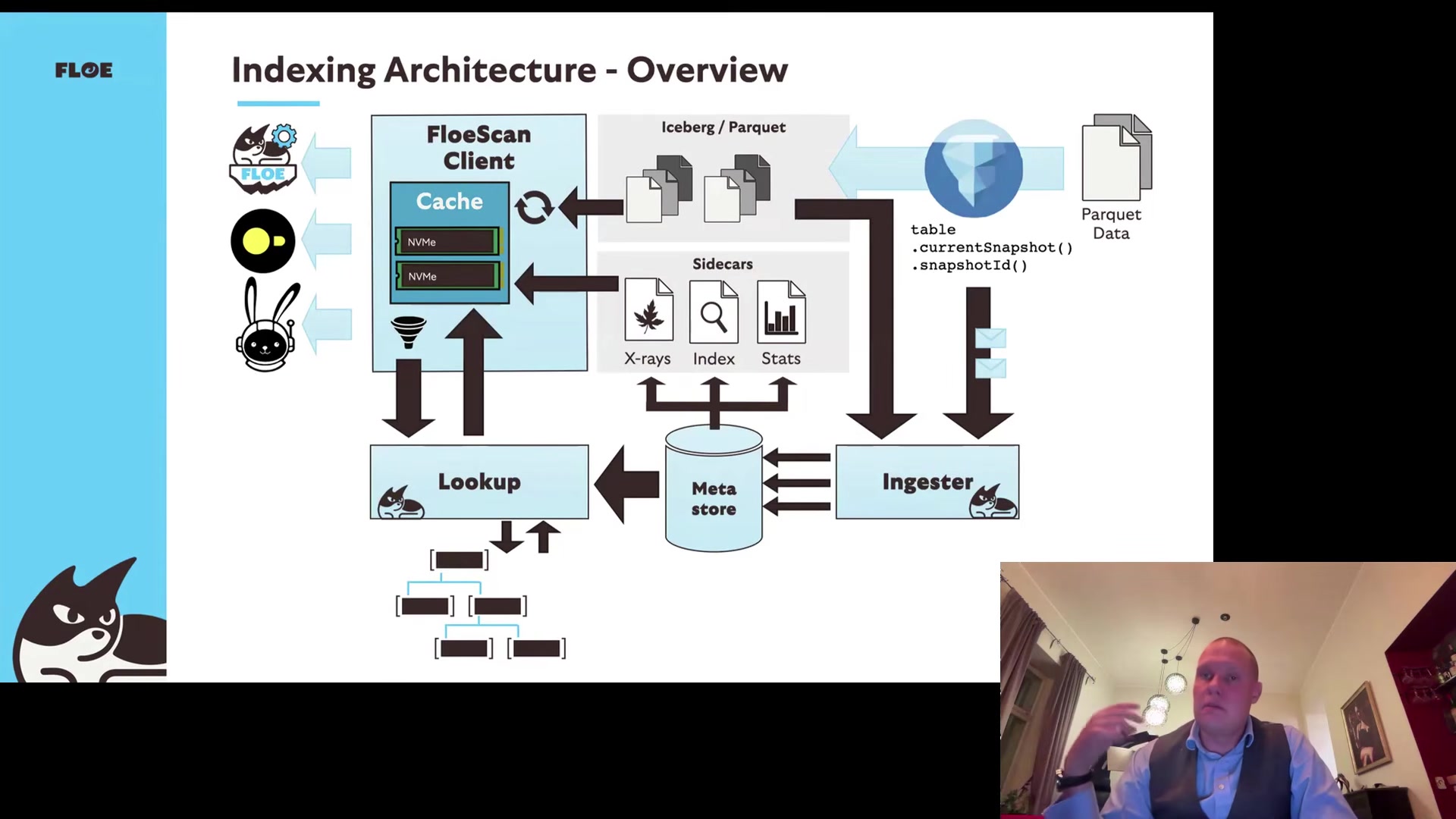
Thomas Kejser (“the database doctor” at Floe, formerly Yellowbrick, and before that years spent tuning SQL Server at Microsoft) gave this hour-long talk in the CMU Database Group’s Fall 2026 seminar series, calling in from Estonia at 11pm. His subject is FloeScan, Floe’s storage engine. It’s designed around a constraint most lakehouse engines get around by copying data: customers want their data to stay in Iceberg, and they want queries against it to behave like queries against a real database....
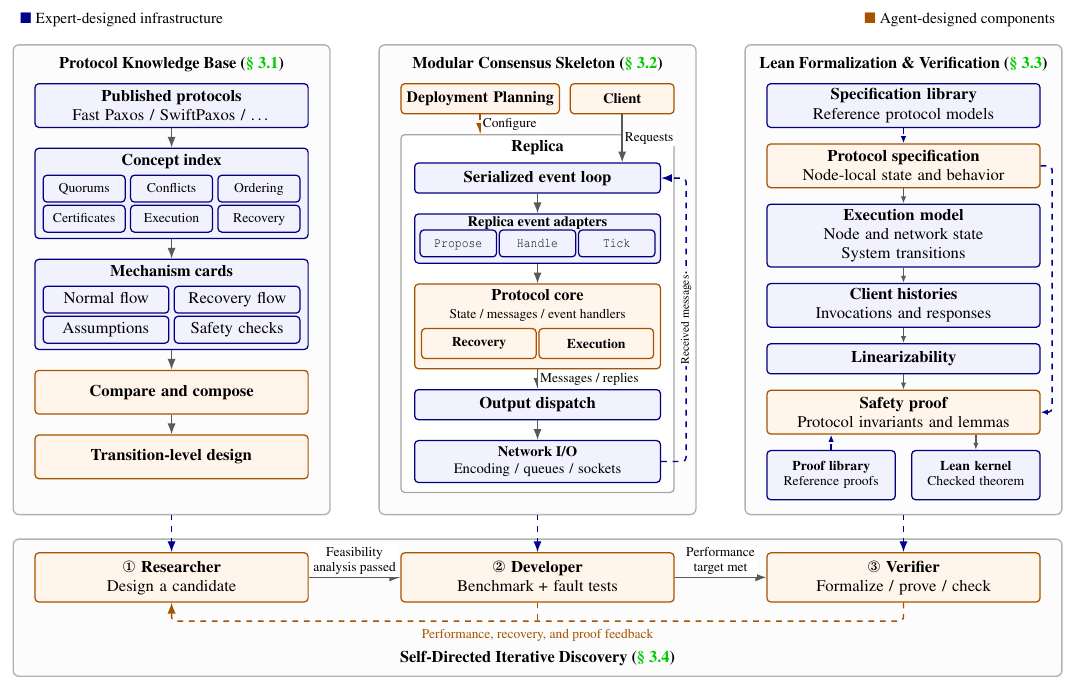
Weekly Paper Notes — one of the top picks from the 2026-10-24 CS paper digest. Area: Distributed Computing. Authors: Clément Burgelin, Rachid Guerraoui, Zicong Hong, Yinan Hu, Anne-Marie Kermarrec, Rafael Pires, Rasmus Moorits Veski, Martijn de Vos (EPFL; alphabetical order) arXiv: 2610.30114 · PDF TL;DR The title asks a question and the last section answers it: “Our answer is no; this is just a new beginning.” The EPFL distributed computing group asks whether a coding agent can produce a practical new consensus protocol: designed, implemented, benchmarked under geo-replication, crash-tested and proved safe....
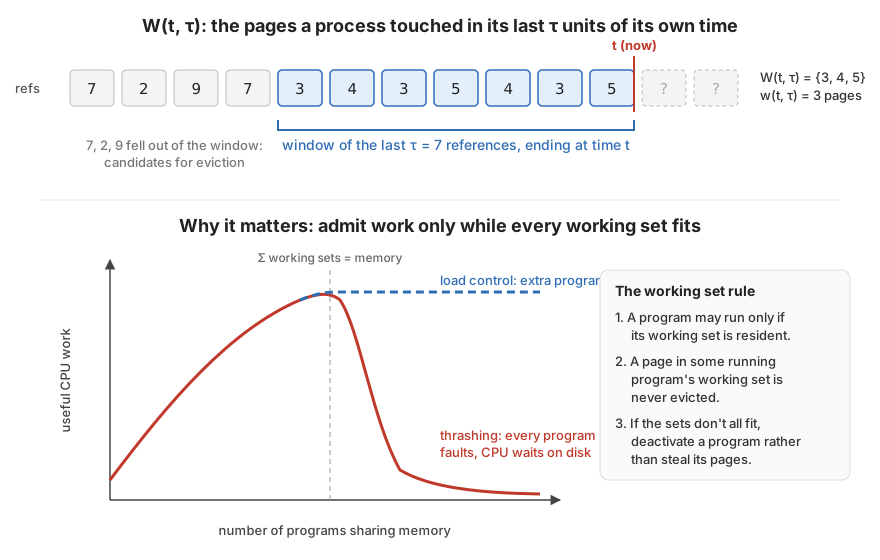
Weekly Paper Notes — the Seminal Paper of the Week for the 2026-10-24 digest. Area: Operating Systems. Author: Peter J. Denning (MIT Project MAC) Published: Communications of the ACM 11(5), May 1968, pp. 323–333. DOI: 10.1145/363095.363141. First presented at the first ACM Symposium on Operating Systems Principles, Gatlinburg, 1967. Why the paper still matters In the mid-1960s, paging was new and it was misbehaving. Machines like Atlas, the IBM 360/67 and the GE 645 running Multics could keep more programs in memory than would fully fit, by paging the parts not in use out to drum or disk....
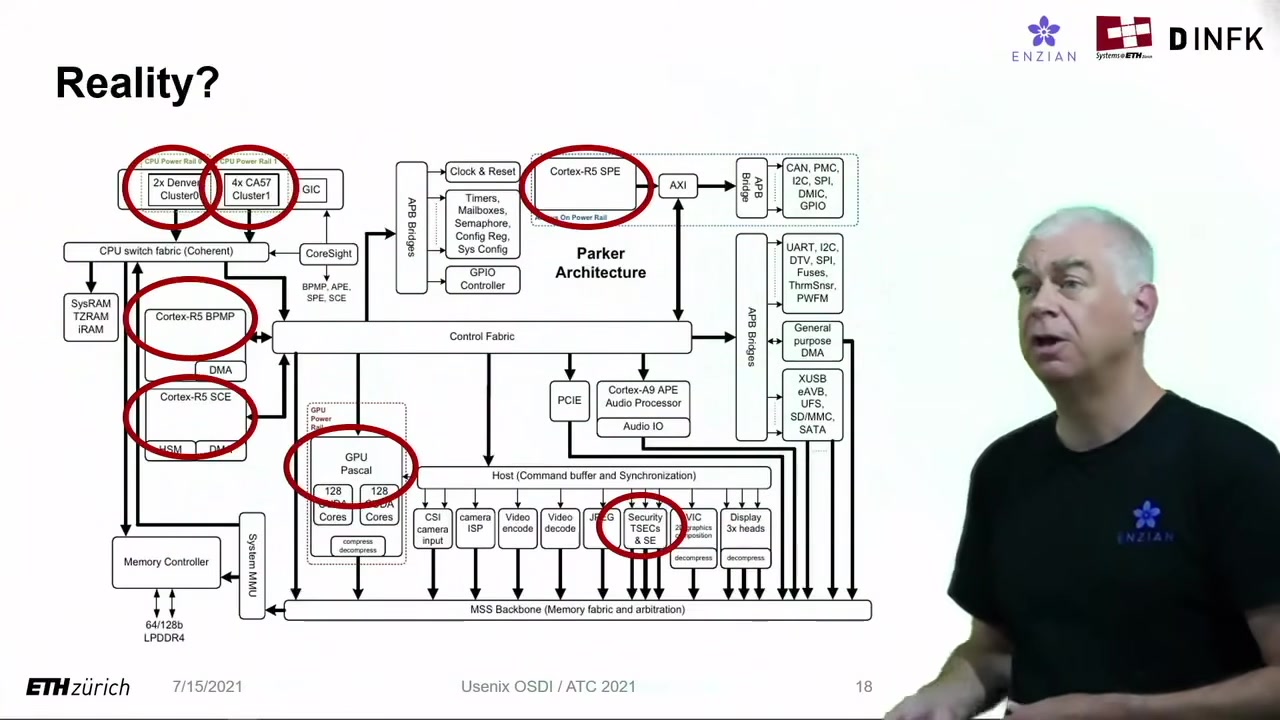
Timothy Roscoe (ETH Zurich, co-lead of the Barrelfish multikernel and the Enzian research computer) gave the joint OSDI/ATC keynote in 2021 and announced up front that he’d chosen the “keynote as therapy” format. What he unloads is a simple argument that keeps getting more true: the machine Linux thinks it runs on doesn’t exist, the thing actually managing a modern computer was never designed by anyone, and the systems research community has mostly stopped looking....
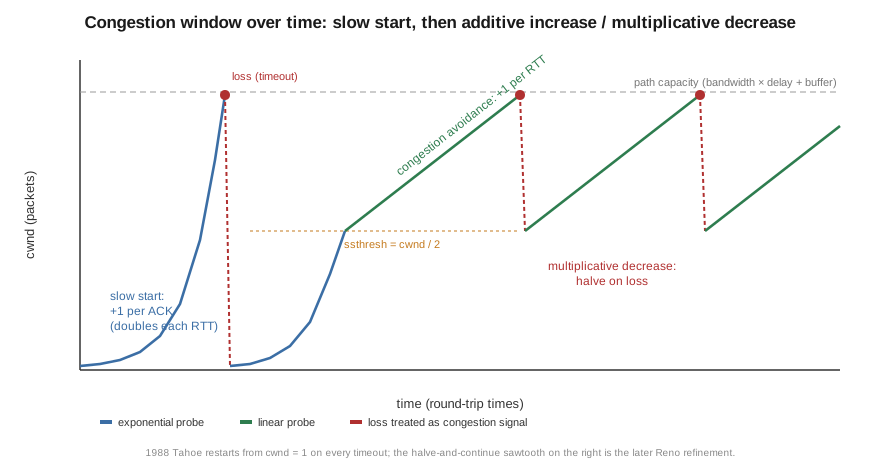
Weekly Paper Notes — the Seminal Paper of the Week for the 2026-10-03 digest. Area: Networking / Systems. Authors: Van Jacobson (Lawrence Berkeley Laboratory), with Michael J. Karels (UC Berkeley) on the revised version Published: Proceedings of ACM SIGCOMM ‘88, Stanford, August 1988; Computer Communication Review 18(4), pp. 314–329. DOI: 10.1145/52324.52356 Why the paper still matters In October 1986 the link between Lawrence Berkeley Laboratory and UC Berkeley, about 400 yards apart and three gateway hops, went from 32 kbit/s to 40 bit/s....
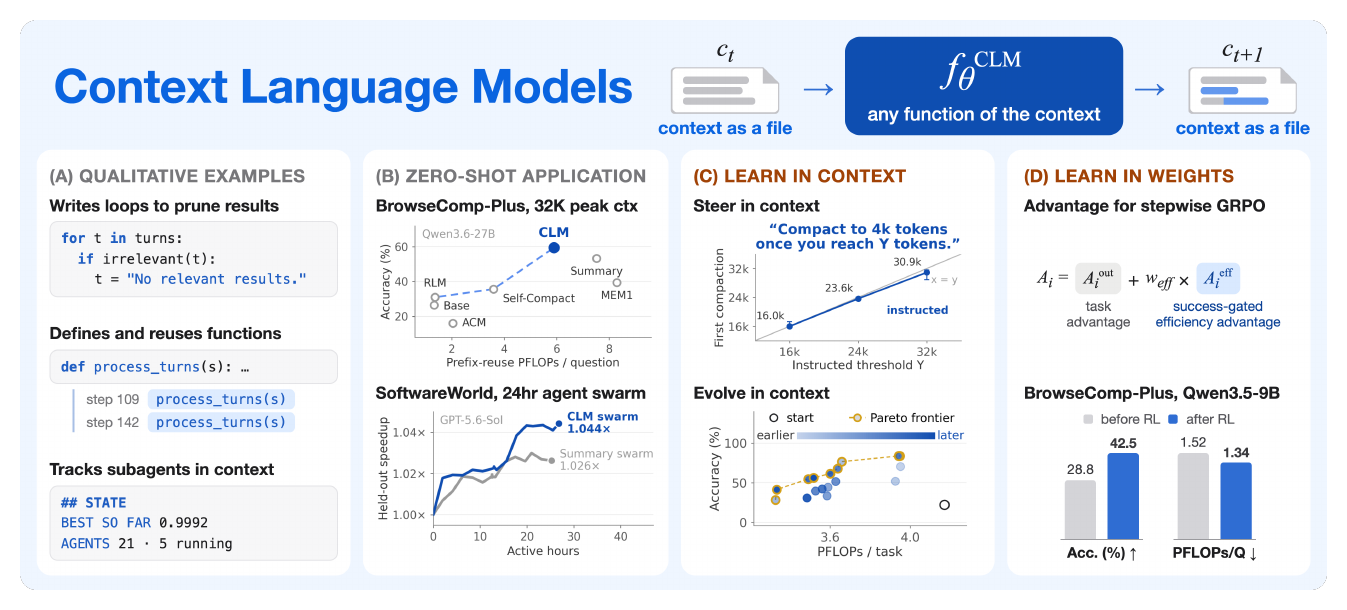
Weekly Paper Notes — one of the top picks from the 2026-10-03 CS paper digest. Area: NLP. Authors: Rulin Shao, Shannon Zejiang Shen, Junjie Oscar Yin, Yuetai Li, Minheng Wang, Hamish Ivison, Radha Poovendran, Nathan Lambert, Teng Xiao, Mike Lewis, Wen-tau Yih, Luke Zettlemoyer, Pang Wei Koh (University of Washington, Meta Superintelligence Labs, MIT, Trillium Labs) arXiv: 2609.37725 · PDF · Code TL;DR A standard language model’s context only grows: each turn appends the model’s output, c_{t+1} = c_t ⊕ f(c_t)....
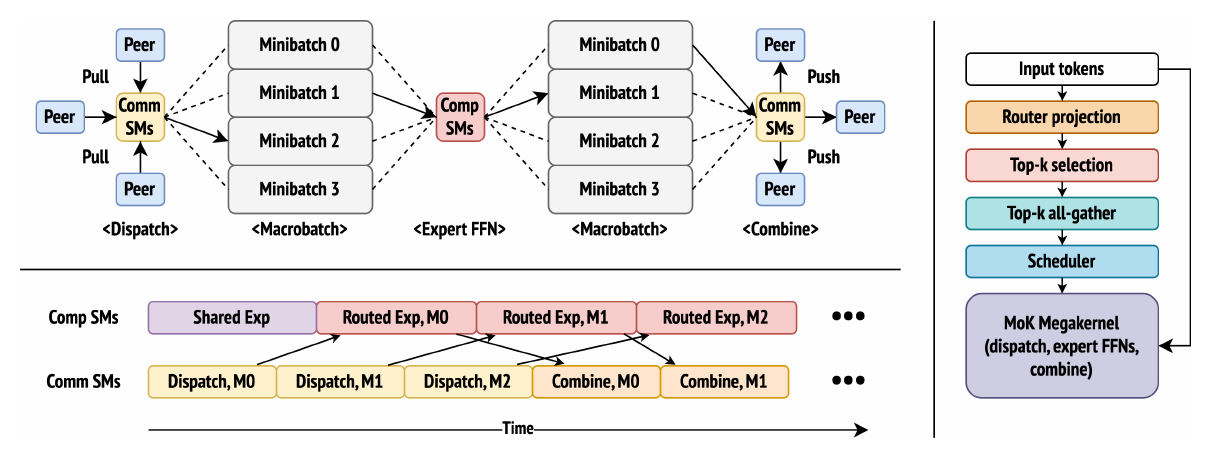
Weekly Paper Notes — one of the top picks from the 2026-10-03 CS paper digest. Area: Distributed Computing. Authors: Stuart H. Sul, Nash Brown (Stanford, Cursor Research), Henry Wildermuth, William Lin, Federico Cassano (Cursor Research), Christopher Ré (Stanford) arXiv: 2609.36070 · PDF · Code TL;DR Mixture-of-Kittens (MoK) is the MoE training kernel Cursor uses to train Composer on GB300 NVL72 racks. The paper’s opening finding is uncomfortable for anyone who has invested in MoE communication libraries: on a 72-GPU NVLink domain, existing expert-parallel systems built for InfiniBand often lose to a naive PyTorch + NCCL baseline, and in nearly half of the evaluated configurations the naive baseline beats every alternative....